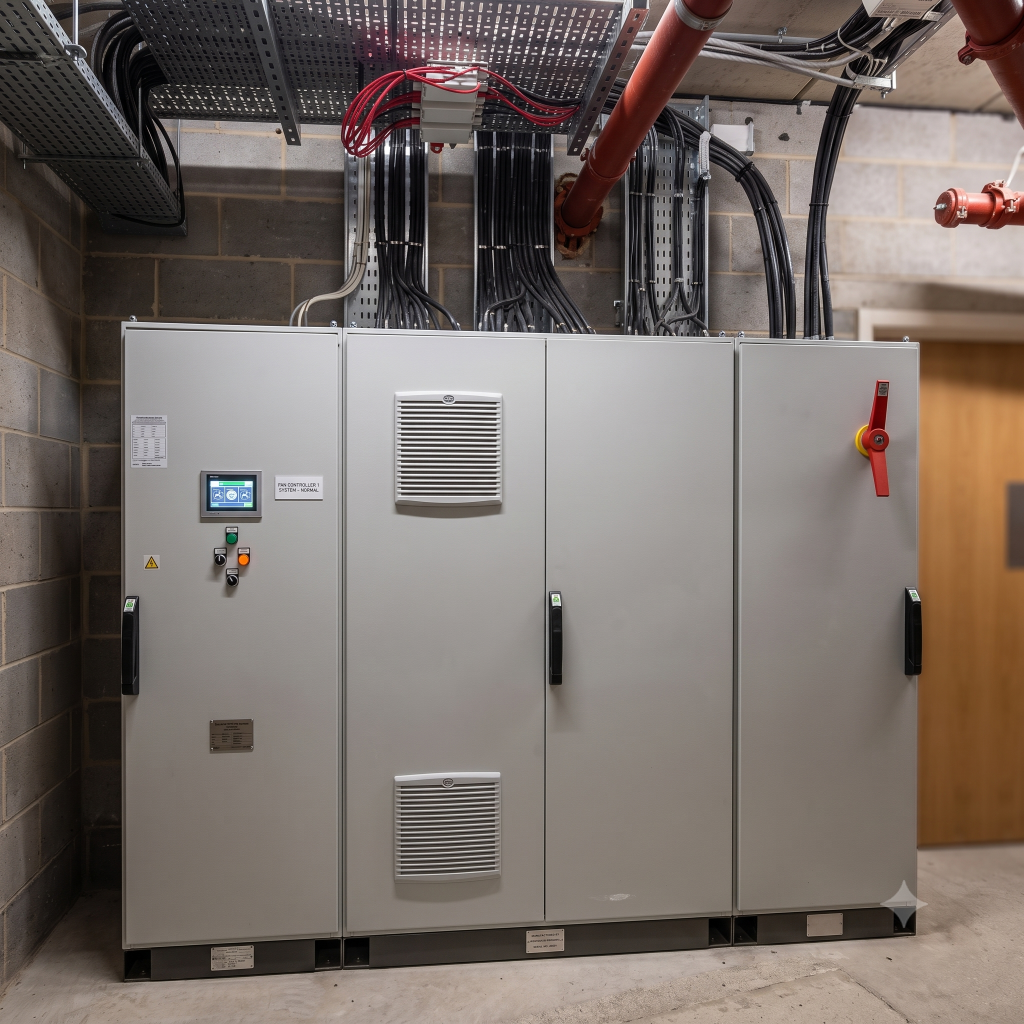
PSB Control Systems & Panel Supply
Car Park Below ground
Car Park Above ground
Building smoke control
Our
Capabilities
Global Excellence in Underground Rail Ventilation
Since the 1970s, WITT UK Group has protected millions of daily rail passengers through advanced ventilation systems installed in the world’s busiest metro networks and railway tunnels. From the Paris Metro renovation with RATP to Delhi Metro Line 3, from Stockholm’s underground network to Mexico City Line 12, our ventilation solutions ensure passenger safety whilst managing the unique challenges of underground rail environments. Our systems address the complex aerodynamics of train piston effects, platform climate control, emergency smoke management, and tunnel cooling requirements. With over 800 tunnel projects completed globally, including prestigious rail systems across Europe, Asia, and Australia, we’ve developed unparalleled expertise in managing air movement in confined underground spaces where millions depend on reliable ventilation for comfort and survival.
Engineered for Rail-Specific Challenges
Metro and rail tunnels present unique ventilation challenges distinct from road tunnels—high-speed train movements creating powerful piston effects, frequent stops requiring platform air quality management, deep stations needing pressure relief systems, and concentrated passenger loads during peak hours. Our solutions incorporate specialised designs including platform screen door integration, draught relief systems preventing uncomfortable air velocities, station smoke control maintaining tenable evacuation conditions, and tunnel cooling managing heat from trains and equipment. Every system undergoes rigorous testing in our AMCA-certified facility, with jet fans tested to ISO 13350 (30-3,000N thrust) and axial fans to ISO 5801 (up to 1,000,000 m³/h at 20,000 Pa). Our temperature-rated systems achieve F200, F300, and F400 classifications to EN 12101-3, with special designs operating at 700°C for critical emergency scenarios.
- Major metro systems including Delhi, Paris RATP, Mexico City, Stockholm
- Platform and station ventilation managing millions of passengers daily
- Train piston effect management and tunnel temperature control
- Emergency smoke extraction systems certified to 700°C operation
- Integration with platform doors, signalling, and control systems
- Comprehensive testing to ISO 13350 and ISO 5801 standards
Why Choose
Metro & Rail Systems
RAIL
EXPERTISE
Specialised understanding of train aerodynamics, platform requirements, and passenger flow dynamics.
PROVEN
SAFETY
Systems protecting major metros globally with millions of daily passengers since the 1970s.
INTEGRATED SOLUTIONS
Complete coordination with signalling, platform doors, and emergency systems for seamless operation.
Frequently
Asked Questions
How do metro ventilation requirements differ from road tunnels?
Metro systems face unique challenges including train piston effects generating pressure waves up to 3,000 Pa, requiring sophisticated pressure relief systems. Platform areas need careful climate control managing heat from trains, equipment, and thousands of passengers. Station depths often exceed 30 metres, demanding complex shaft ventilation strategies. Emergency scenarios must consider higher passenger densities—up to 2,000 people per train—requiring rapid smoke clearance whilst maintaining tenable platform conditions. Additionally, electromagnetic compatibility with signalling systems and integration with platform screen doors add complexity not found in road tunnels.
What is the piston effect and how is it managed?
The piston effect occurs when trains push air through tunnels, creating powerful pressure waves and air velocities exceeding 20 m/s. These forces can cause passenger discomfort, door malfunctions, and structural stress. Management strategies include: pressure relief shafts at strategic locations, draught relief systems at stations preventing platform air velocities above 5 m/s, over-track exhaust (OTE) and under-platform exhaust (UPE) systems, and variable-geometry dampers responding to train movements. Our designs use CFD modelling validated against operational data from 800+ projects, ensuring passenger comfort whilst optimising energy consumption.
How are deep underground stations ventilated?
Deep stations require sophisticated ventilation addressing multiple challenges: stack effect in deep shafts creating powerful convection currents, geothermal heat requiring year-round cooling, limited surface connections for air supply/exhaust, and emergency smoke control for extended vertical evacuation. Solutions typically incorporate: multiple ventilation shafts with reversible fans, station box ventilation maintaining platform conditions, escalator and lift shaft pressurisation, and integration with tunnel ventilation for system-wide air management. Our deepest installations exceed 60 metres, requiring careful pressure management and emergency strategies.
What emergency systems are required for metro tunnels?
Metro emergency ventilation must enable safe evacuation of thousands of passengers whilst supporting Fire Service operations. Critical systems include: station smoke extraction maintaining visibility on platforms and concourses, tunnel ventilation creating smoke-free evacuation routes, cross-passage pressurisation preventing smoke spread between tunnels, and emergency fans rated to 400°C or higher for extended operation. Response times are crucial—systems must activate within 60 seconds, achieving design airflows within 3 minutes. Our F400-rated fans maintain operation at 400°C for 120 minutes, exceeding most international standards.
How is energy efficiency achieved in 24/7 metro operations?
Modern metro ventilation incorporates multiple efficiency strategies crucial for systems operating continuously. Variable-speed drives adjust to passenger loads and ambient conditions, achieving 40-60% energy savings. Intelligent control systems coordinate with train timetables, reducing ventilation during off-peak periods. Heat recovery systems capture waste energy from exhaust air, whilst night-time purge ventilation uses cool ambient air reducing mechanical cooling requirements. Platform screen doors prevent tunnel air mixing with station environments, significantly reducing cooling loads. These strategies typically reduce energy consumption by 50% compared to constant-speed systems.
What maintenance access is required for metro ventilation?
Metro systems demand careful maintenance planning minimising passenger disruption whilst ensuring safety system reliability. Design considerations include: equipment rooms accessible without track access, over-track installations with walkways and fall protection, quick-release mechanisms enabling rapid fan removal, and redundancy allowing maintenance without system shutdown. Critical components require monthly inspection, with comprehensive annual testing including emergency scenarios. Our maintenance programmes coordinate with engineering hours—typically 01:00-05:00—using specialised rail-certified technicians. Remote monitoring enables predictive maintenance, identifying issues before failures occur, essential for systems where downtime affects millions of passengers.